
Introduction
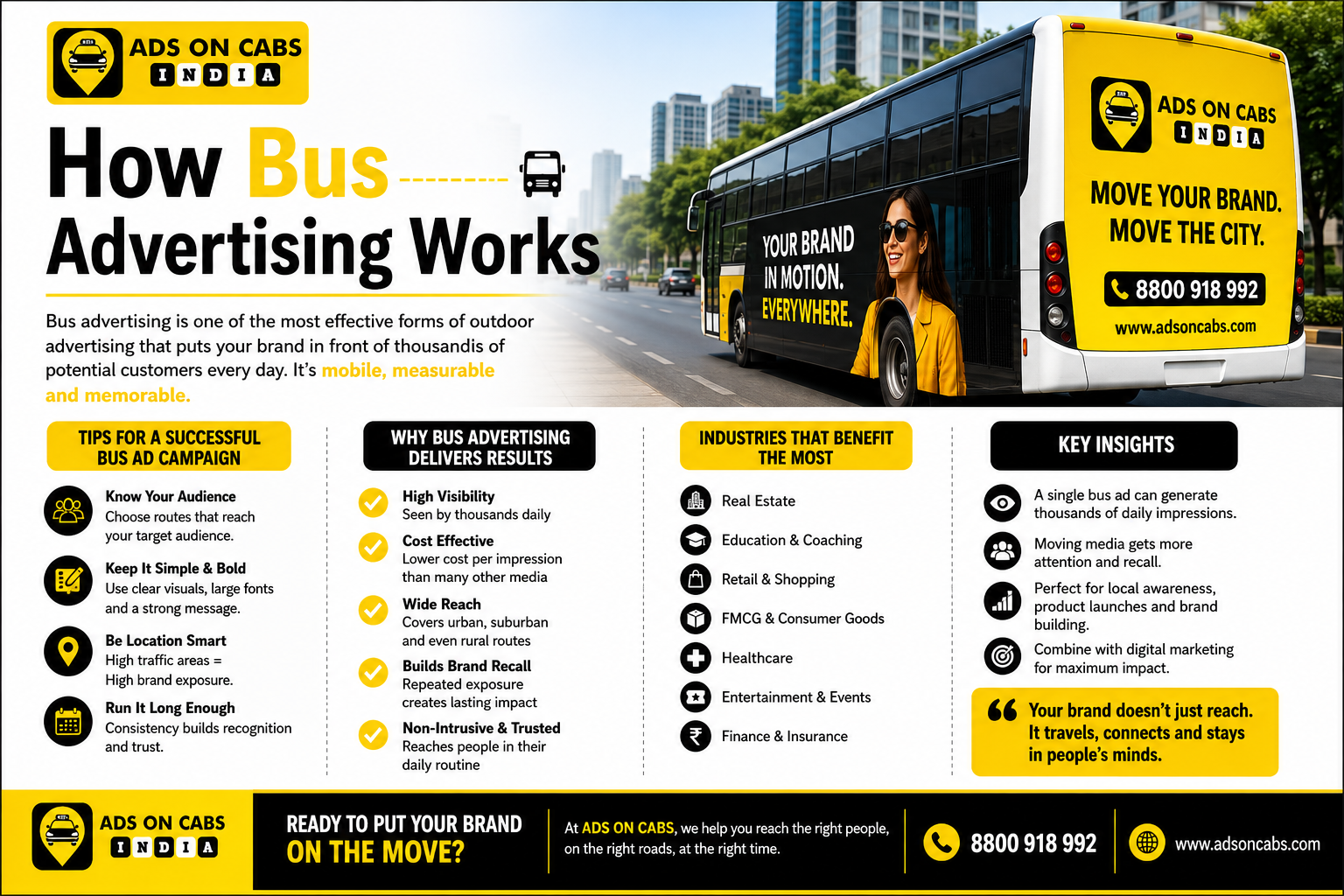
In today’s competitive marketing landscape, businesses are constantly looking for high-visibility advertising methods that can reach large audiences at affordable costs. One of the most effective outdoor advertising solutions is bus advertising. From local routes to intercity travel, buses move through crowded markets, residential areas, commercial hubs, and high-traffic roads every single day, making them powerful moving billboards.
For businesses aiming to increase brand awareness, generate leads, and create strong local visibility, bus advertising offers unmatched exposure. Whether it is a startup, retail store, educational institute, healthcare brand, or corporate company, bus advertising helps brands stay visible in front of thousands of people daily.
In this guide, we will explain how bus advertising works, the different types of bus ads, benefits, campaign process, costs, targeting options, and why it remains one of the most impactful outdoor advertising solutions.
What is Bus Advertising?
Bus advertising is a form of outdoor advertising where promotional messages are displayed on buses. These advertisements can appear on the exterior or interior of buses and are designed to attract attention from pedestrians, commuters, motorists, and passengers.
Unlike static billboards, bus advertising is mobile, meaning the advertisement travels across multiple locations throughout the day. This increases reach and allows brands to target different audiences in different areas.
Bus advertising is commonly used for:
- Brand awareness campaigns
- Product launches
- Political campaigns
- Real estate promotions
- Educational institute marketing
- Event promotions
- Healthcare awareness campaigns
- E-commerce promotions
- Local business advertising
How Bus Avertising Works
Bus advertising works through a structured advertising process involving route selection, creative design, printing, installation, and campaign execution.
1. Understanding Campaign Goals
The first step is identifying the objective of the campaign. Brands may want:
- More visibility
- Local market penetration
- Product promotion
- Lead generation
- Event awareness
- Brand recall
The campaign strategy depends heavily on the business goals.
2. Selecting the Target Area
One of the biggest advantages of bus advertising is geographical targeting. Advertisers can choose buses operating in specific areas such as:
- Commercial markets
- Residential areas
- IT hubs
- Educational zones
- Airport routes
- Metro connectivity routes
- High-traffic city roads
For example, a coaching institute may target buses near colleges and student areas, while a luxury brand may focus on premium commercial locations.
3. Choosing Bus Routes
The success of bus advertising depends greatly on route selection.
Advertisers usually select routes based on:
- Daily traffic volume
- Audience demographics
- Peak commuter movement
- Popular city locations
- Brand target audience
Since buses travel across multiple locations every day, brands receive repeated visibility from a single campaign.
4. Selecting the Type of Bus Advertisement
There are multiple bus advertising formats available depending on budget and campaign goals.
Full Bus Wrap Advertising
This format covers almost the entire bus exterior with brand graphics.
Benefits:
- Maximum visibility
- High brand impact
- Strong visual presence
- Excellent for large campaigns
Back Panel Advertising
Ads are placed on the rear side of buses.
Benefits:
- Highly visible in traffic
- Cost-effective
- Great for brand recall
Side Panel Advertising
Advertisements are displayed on one or both sides of the bus.
Benefits:
- Large display area
- Strong roadside visibility
- Effective in crowded roads
Interior Bus Advertising
Ads are placed inside buses for passengers.
Examples include:
- Seat branding
- Handle branding
- Poster displays
- Digital screens
Benefits:
- Longer viewer attention
- Direct engagement with passengers
- Effective for informational campaigns
Design and Creative Development
The advertisement design plays a major role in campaign success.
A good bus advertisement should:
- Be visually attractive
- Use bold colors
- Include minimal text
- Have a clear call-to-action
- Be readable from a distance
- Include strong branding elements
Since buses are moving vehicles, people usually view the advertisement for only a few seconds. Therefore, the message must be simple and instantly understandable.
Important elements include:
- Brand logo
- Tagline
- Product image
- Contact information
- Website or QR code
Printing and Installation Process
Once the design is finalized, the advertisement is printed using high-quality weather-resistant vinyl materials.
The installation process includes:
- Surface cleaning
- Vinyl printing
- Lamination
- Graphic application
- Quality inspection
Professional installation ensures the advertisement remains durable throughout the campaign duration.
Campaign Duration
Bus advertising campaigns can run for different durations based on marketing goals.
Common campaign durations include:
- 1 month
- 3 months
- 6 months
- 12 months
Longer campaigns generally provide better brand recall and audience familiarity.
How Bus Advertising Reaches Customers
Bus advertising works because of repeated exposure.
Every day, buses pass through:
- Traffic signals
- Marketplaces
- Shopping areas
- Office districts
- Residential neighborhoods
- Schools and colleges
This repeated movement helps consumers remember the brand over time.
A single bus can generate thousands of impressions daily, making bus advertising one of the most cost-efficient branding solutions.
Advantages of Bus Advertising
1. Massive Brand Visibility
Bus advertising offers large-scale visibility in busy urban environments.
Unlike digital ads that users can skip or block, bus advertisements remain constantly visible to the public.
2. Mobile Advertising Advantage
Traditional hoardings stay in one location, but buses move across the city.
This mobility allows brands to reach:
- Different neighborhoods
- Diverse customer groups
- Multiple business districts
3. High Frequency Exposure
People often see the same buses repeatedly during daily travel.
Repeated exposure improves:
- Brand recall
- Trust
- Familiarity
- Purchase intent
4. Cost-Effective Marketing
Compared to television or large-scale digital campaigns, bus advertising is relatively affordable.
Brands receive long-term visibility without paying per click or per impression.
5. Strong Local Targeting
Businesses targeting specific cities or areas benefit significantly from bus advertising.
Local businesses can focus on routes where their potential customers travel daily.
6. Non-Intrusive Advertising
Bus ads naturally become part of the city environment.
Unlike popup ads or interruptive marketing, bus advertising captures attention without disturbing the audience.
Types of Businesses That Benefit from Bus Advertising
Many industries use bus advertising successfully.
Retail Brands
Retail stores use bus advertising to increase footfall and promote offers.
Educational Institutes
Schools, colleges, coaching centers, and universities target student-heavy routes.
Healthcare Industry
Hospitals, clinics, diagnostic centers, and healthcare campaigns use buses for awareness.
Real Estate Companies
Builders and developers promote residential and commercial projects through city-wide bus campaigns.
E-commerce and Apps
Digital brands use bus wraps for app downloads and market visibility.
Government Campaigns
Public awareness initiatives often use buses for:
- Health campaigns
- Traffic awareness
- Election campaigns
- Public welfare messaging
Bus Advertising vs Other Outdoor Advertising
| Advertising Type | Mobility | Visibility | Cost Efficiency | Audience Reach |
|---|---|---|---|---|
| Bus Advertising | High | Very High | High | Large |
| Hoarding Advertising | Low | High | Medium | Fixed Area |
| Metro Advertising | Medium | High | Medium | Urban Commuters |
| Newspaper Advertising | None | Temporary | Medium | Readers Only |
| Digital Ads | Online Only | Variable | Depends on Budget | Targeted |
Bus advertising stands out because it combines mobility, affordability, and continuous exposure.
Challenges in Bus Advertising
While bus advertising is highly effective, there are some challenges brands should consider.
Limited Message Time
People usually view moving bus ads for a short duration.
Solution:
Use simple messaging and bold visuals.
Weather Conditions
Outdoor ads face dust, rain, and sunlight exposure.
Solution:
Use high-quality printing materials.
Route Dependency
Campaign success depends on selecting the right routes.
Solution:
Work with experienced advertising agencies for proper planning.
Measuring Bus Advertising Effectiveness
Brands can measure campaign effectiveness using:
- Website traffic growth
- QR code scans
- Customer inquiries
- Store visits
- Social media mentions
- Brand recall surveys
- Sales increase
Modern campaigns often combine bus advertising with digital marketing for better tracking and conversion.
Why Bus Advertising Still Works in the Digital Era
Despite the growth of online advertising, outdoor advertising continues to remain highly effective.
Reasons include:
- People spend more time outdoors and commuting
- Outdoor ads cannot be skipped
- Large-format visuals attract attention naturally
- Mobile advertising increases repeated exposure
- Consumers trust familiar brands more
Bus advertising also complements digital marketing by increasing offline visibility while digital platforms drive online conversions.
Future of Bus Advertising
Bus advertising is evolving with technology.
Modern innovations include:
- Digital bus displays
- LED bus panels
- QR code integration
- Interactive campaigns
- GPS-based campaign tracking
- Data-driven route planning
As cities continue to grow, bus advertising is expected to remain one of the strongest forms of outdoor media advertising.
Why Choose ADS ON CABS for Bus Advertising?
ADS ON CABS provides professional outdoor advertising solutions across multiple cities and advertising formats.
Additional Insights on How Bus Advertising Works
Bus Advertising and Consumer Psychology
One of the major reasons bus advertising performs effectively is because of repeated visual exposure.
When consumers repeatedly see the same advertisement during their daily travel routines, the brand gradually becomes familiar. This psychological effect is known as repetitive brand recall.
Even if customers do not immediately purchase a product or service, repeated exposure increases the chances that they will remember the brand later when making a buying decision.
Bus advertising works especially well because:
- People travel on the same routes daily
- Traffic signals increase ad viewing time
- Large visuals attract attention naturally
- Mobile ads create broader city exposure
This combination makes bus advertising a strong awareness-building tool.
How Different Cities Use Bus Advertising
Bus advertising strategies often vary depending on the city size, traffic density, and commuter behavior.
Metropolitan Cities
In metro cities like Delhi, Mumbai, Bengaluru, and Hyderabad, bus advertising is commonly used for:
- Large-scale branding
- App promotions
- Political campaigns
- Real estate marketing
- Entertainment promotions
Heavy traffic and long commuting hours increase audience exposure.
Tier-2 and Tier-3 Cities
In smaller cities, bus advertising is highly effective for:
- Local business promotions
- Educational institutes
- Healthcare campaigns
- Retail stores
- Government awareness campaigns
Since local visibility matters more in smaller markets, transit advertising often produces strong recall.
Common Mistakes Brands Make in Bus Advertising
While bus advertising can deliver excellent results, poor planning may reduce campaign effectiveness.
Overcrowded Designs
Many advertisers try to include too much information.
This makes the advertisement difficult to understand quickly.
Best practice:
- Use fewer words
- Focus on one message
- Highlight the brand clearly
Wrong Route Selection
Choosing routes without understanding the target audience can reduce visibility quality.
For example:
- Luxury products may not perform well on low-income routes
- Student-focused campaigns should target educational areas
Proper route planning is essential.
Ignoring Campaign Duration
Very short campaigns may not generate sufficient recall.
Outdoor advertising usually works best with consistent long-term exposure.
Weak Call-to-Action
Advertisements without clear next steps may fail to convert viewers.
Always guide viewers toward:
- Calling
- Visiting a website
- Scanning a QR code
- Visiting a store
Bus Advertising and Brand Trust
Outdoor advertising often creates a sense of credibility.
Consumers tend to trust brands that invest in large-scale advertising because they appear more established and professional.
A strong bus advertising campaign can improve:
- Brand authority
- Customer confidence
- Market reputation
- Public familiarity
This is especially useful for:
- New businesses
- Expanding companies
- Startups entering competitive markets
Combining Bus Advertising with Other Advertising Channels
Many successful brands combine bus advertising with additional marketing channels for better results.
Bus Advertising + Digital Marketing
This strategy helps brands:
- Increase online traffic
- Improve social engagement
- Boost app downloads
- Retarget customers online
QR codes on buses can directly connect offline audiences to online campaigns.
Bus Advertising + Hoarding Advertising
Using both formats together creates:
- Fixed visibility through hoardings
- Mobile visibility through buses
This combination strengthens brand dominance across a city.
Bus Advertising + Metro Advertising
Transit advertising combinations allow businesses to target:
- Road commuters
- Metro passengers
- Office workers
- Daily travelers
Integrated transit campaigns maximize exposure.
Industries That Commonly Invest in Bus Advertising
FMCG Brands
Fast-moving consumer goods companies use bus advertising for mass visibility.
Telecom Companies
Telecom brands frequently advertise data plans, offers, and new launches through transit media.
OTT Platforms and Entertainment Brands
Movies, web series, and streaming platforms often use full bus wraps for promotional campaigns.
Political Campaigns
Political parties use bus advertising for election promotions and public outreach.
Financial Services
Banks, insurance companies, and fintech brands use transit advertising to improve trust and awareness.
Environmental Advantages of Shared Transit Advertising
Bus advertising is considered more environmentally efficient compared to individual promotional vehicle campaigns.
Since public buses already operate daily routes, advertisements use existing transportation systems rather than adding extra vehicles to roads.
This makes transit media a relatively sustainable advertising option.
How Technology is Transforming Bus Advertising
Modern outdoor advertising is becoming increasingly data-driven.
Technological advancements include:
- GPS tracking
- Audience analytics
- Smart route optimization
- Digital LED displays
- Programmatic DOOH integration
These innovations help brands:
- Measure visibility better
- Optimize campaigns
- Improve targeting
- Track campaign performance
The future of bus advertising is expected to become even more interactive and measurable.
Importance of Professional Media Planning
Successful bus advertising campaigns require careful planning.
Professional media planners help businesses:
- Select ideal routes
- Optimize budgets
- Choose the right advertising formats
- Maximize impressions
- Avoid ineffective placements
Without proper planning, businesses may not achieve maximum return on investment.
Why Brands Continue to Invest in Bus Advertising
Despite rapid growth in online marketing, bus advertising remains highly valuable because it delivers something digital platforms often struggle with — unavoidable physical visibility.
Consumers cannot skip, block, or ignore large outdoor advertisements as easily as online ads.
This gives bus advertising several long-term advantages:
- Consistent exposure
- City-wide presence
- Strong visual impact
- Better local awareness
- Cost-efficient branding
For many businesses, bus advertising acts as a powerful top-of-funnel branding strategy.
Conclusion
Bus advertising continues to be one of the strongest outdoor advertising solutions for brands aiming to achieve large-scale visibility and long-term brand recall.
Its ability to move across multiple locations every day allows businesses to reach diverse audiences in real-world environments where attention is naturally captured.
With the right strategy, route selection, creative execution, and campaign duration, bus advertising can deliver exceptional visibility and branding results.
As cities grow larger and daily commuting increases, transit advertising will continue playing a major role in modern marketing strategies.
Businesses looking to strengthen their market presence should consider bus advertising as an essential part of their integrated advertising approach.
About ADS ON CABS
ADS ON CABS is a leading outdoor advertising company offering professional transit media and branding solutions across India.
Our advertising services include:
- Bus Advertising
- Cab Advertising
- Metro Advertising
- Hoarding Advertising
- DOOH Advertising
- Cinema Advertising
- Transit Media Branding
We help businesses create impactful campaigns that maximize brand visibility and audience engagement.
From route planning to campaign execution, our team ensures professional outdoor advertising solutions designed for strong market impact.
Partner with ADS ON CABS to create powerful transit advertising campaigns that help your brand stand out in competitive markets.