Searching for a top ad agency in Delhi? A strong media proposal should explain how your advertising will reach the people most likely to become customers. For a showroom in Rajouri Garden, an education business in Janakpuri or a service brand in Dwarka, the right plan starts with a clear customer catchment and a realistic campaign objective.
Ads On Cabs India helps businesses explore outdoor, transit and digital advertising. This guide focuses on seven practical checks for evaluating a media plan before you approve production or book a display period.
What should a top ad agency in Delhi deliver?
A useful agency proposal connects audience, location, creative and measurement. The word “top” should describe the standard you expect from your advertising partner, rather than an unsupported ranking. Ask for evidence relevant to your brief: proposed placements, clear responsibilities and a written explanation of how the campaign will run.
1. Define one primary business objective
Decide whether the campaign should build local awareness, support a store launch, encourage enquiries or promote an event. Each objective requires a different message and response path. A campaign built around appointment bookings needs a working booking page; a launch campaign needs an opening date that remains visible throughout the display period.
Share the product, customer profile, offer, campaign dates and budget range. These details allow an agency to compare practical options instead of presenting a generic package.
2. Map the Delhi customer catchment
Think beyond a postcode. Where do customers live, work, shop and commute? A Rajouri Garden retailer might prioritise nearby shopping journeys, while a Janakpuri coaching centre may need to reach students and parents within a convenient travelling distance. A Dwarka business may focus on the sectors around its service area.
These are planning examples, not promises of available inventory or dedicated routes. Ask the agency to verify the actual coverage, operating conditions and booking availability for your dates.
3. Compare media by the job it needs to do
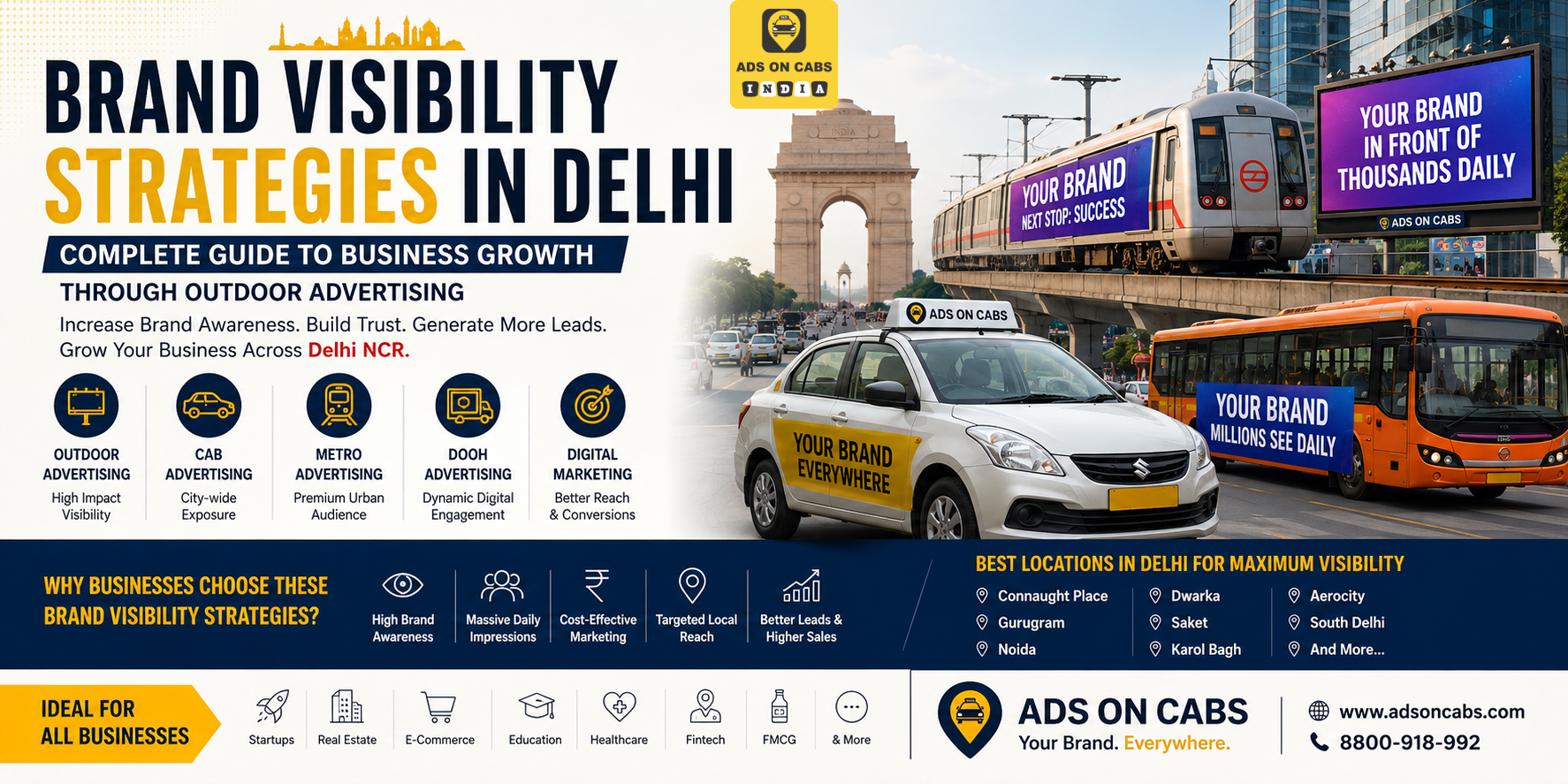
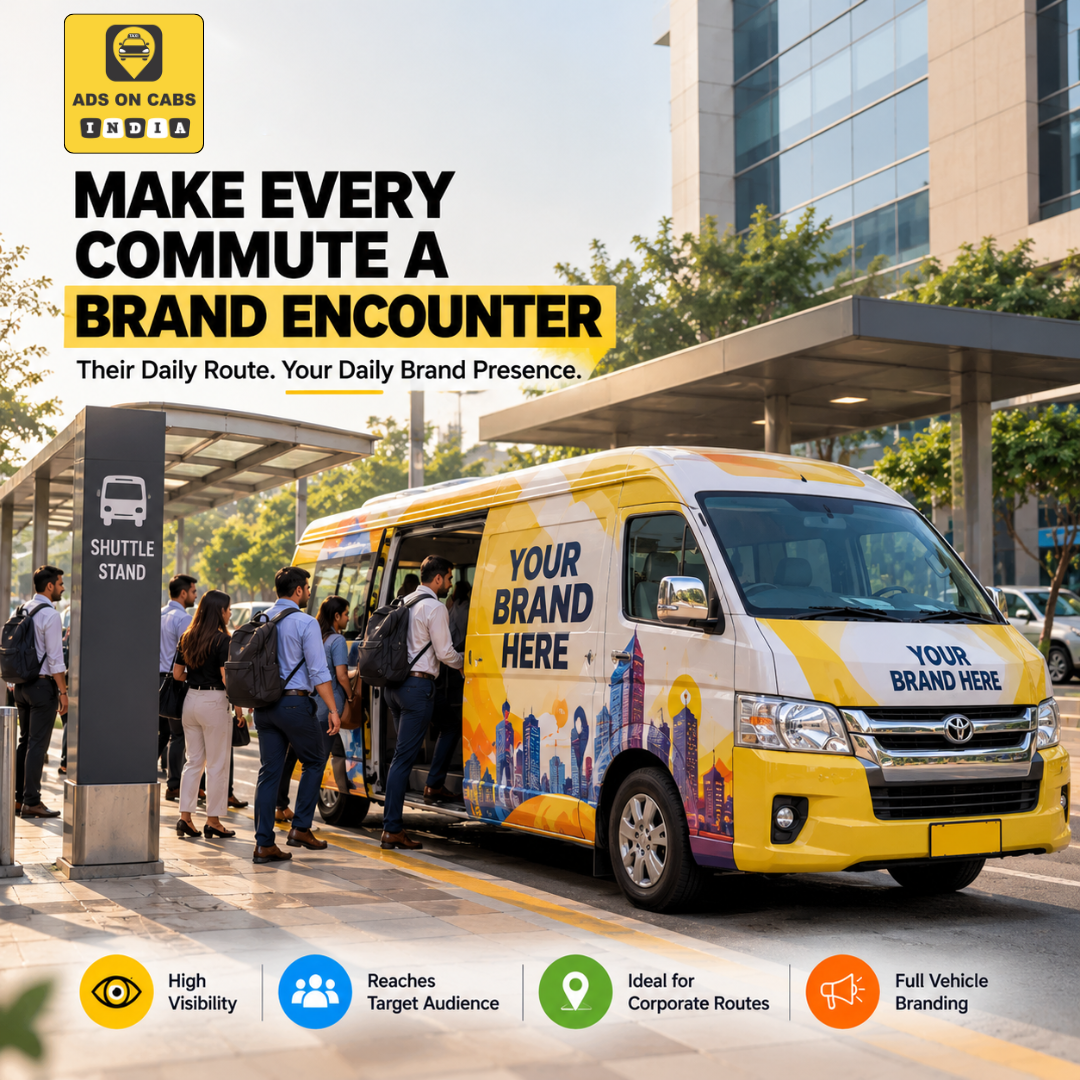
Cab branding, bus advertising, hoardings, metro media and digital channels serve different purposes. Moving media can introduce a brand along journeys; a fixed display can reinforce a specific location; digital activity can provide a direct enquiry route. The strongest mix depends on the brief and confirmed availability.
- Cab and transit branding: Review the vehicle count, branding surfaces and operating scope.
- Hoardings and fixed sites: Evaluate sightlines, display dimensions and installation conditions.
- Metro media: Request the exact station or format and approved display period.
- Digital support: Match the advertisement to a relevant landing page and a clear action.
4. Check creative readability before printing
Outdoor creative needs a simple hierarchy: brand, central message and response detail. Test the layout at a smaller size before approving the final artwork. Crowded text, a weak contrast or an unclear offer can make an otherwise suitable placement less useful.
Ask who will adapt the design for each surface, approve the print proof and check the installed result. Keep product statements accurate and ensure dates, contact details and landing pages match the advertisement.
5. Request an itemised scope and cost breakdown
Compare equivalent proposals. Record media rental, printing, installation, creative adaptation, maintenance and removal separately where applicable. Confirm taxes, payment milestones, artwork deadlines and the treatment of delays in writing.
A lower headline quote does not automatically represent better value. The meaningful comparison is the total cost for the same deliverables and display period.
6. Agree on execution evidence
Before launch, specify the photographs, installation records or delivery updates you will receive. Ask who handles damaged artwork or a change in media availability. Establish a named contact and a review schedule so issues can be addressed while the campaign is still running.
7. Measure outcomes with clear limits
Choose indicators that match the objective: qualified enquiries, landing-page visits, bookings or customer-reported awareness. Use campaign-specific links where suitable. Photographs demonstrate installation; they do not by themselves prove audience reach or sales.
Record a baseline and keep the review period consistent. Consider other factors, such as simultaneous promotions, before attributing every business change to one advertisement.
Plan your Delhi campaign with Ads On Cabs
If you are shortlisting a top ad agency in Delhi, bring these seven checks to your next agency discussion. Ads On Cabs India can help you explore a campaign brief across outdoor, transit and digital options, subject to scope and availability.
For locality planning across the wider region, read our ad agency in Delhi NCR guide. Learn more about our team and start a campaign discussion through Ads On Cabs India.
Frequently asked questions
How do I shortlist a top ad agency in Delhi?
Compare relevant capabilities, an itemised proposal, a realistic execution plan and agreed reporting. Ask how each recommendation fits your customer catchment.
Can one media plan cover Rajouri Garden, Janakpuri and Dwarka?
It may be possible to combine placements, but coverage depends on the formats, inventory and operating conditions available. Confirm each area in the written plan.
Does a larger advertising budget guarantee more sales?
No. Results depend on audience fit, creative, the offer and the customer experience. Agree on measurable objectives rather than a guaranteed sales figure.